
Collagen: The Supplement Debate, The Science, and Why Giving Your Body the Building Blocks Matters More
Updated: May 5
A practitioner's perspective
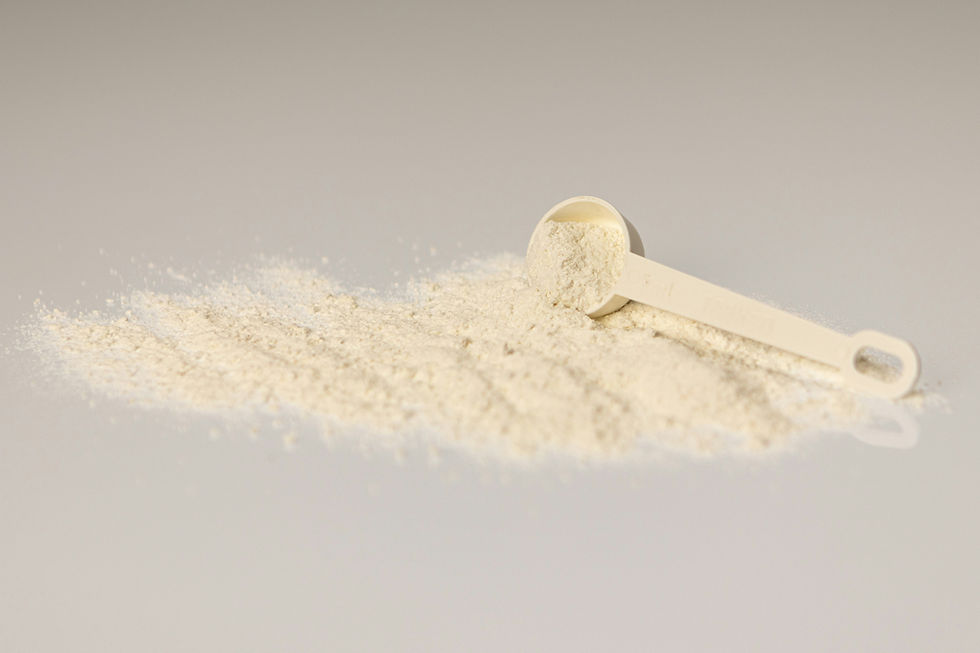
Collagen is everywhere: in protein powders, in skin creams, and in the healthy ageing conversation. But underneath the marketing, what does the science actually say? Is taking a collagen supplement the right approach, or is there a more intelligent way to support your body's own collagen production?
As a practitioner, I have long held the view that rather than asking whether collagen supplements work, the more useful question is: does your body have everything it needs to make collagen?
What is collagen and why does it matter?
Collagen is the most abundant protein in the human body, making up roughly 30% of its total protein content. It's the structural scaffolding of the body, found in the digestive tract, skin, tendons, ligaments, cartilage, bone, and blood vessels. There are multiple types, but types I, II, and III are the most significant for everyday health and ageing.
After the age of approximately 20, the body's collagen production declines by around 1% every year. By midlife, this cumulative loss begins to show: skin loses elasticity, joints become less resilient, tendons take longer to recover, and bones gradually lose density. The question practitioners face is how best to address this decline.
The case for collagen supplementation
The argument for directly taking collagen has become more scientifically credible over the past decade, largely because of advances in understanding how hydrolysed collagen behaves in the body.
Absorption: does it survive digestion?
The traditional objection to collagen supplements was straightforward: proteins are broken down into amino acids during digestion, so swallowing collagen is no different from eating any other protein. However, more recent research challenges this view.
A randomised, double-blind crossover study published in Frontiers in Nutrition (2024) found that after ingesting collagen hydrolysates from fish, porcine, and bovine sources, a higher amount of total hydroxyproline compared to free hydroxyproline was detected in the bloodstream, indicating that substantial amounts of hydroxyproline-containing protein chains were absorbed intact, regardless of source or molecular weight.
A crossover study found that taking collagen supplements increased key amino acids (glycine, proline, and hydroxyproline) in the blood over four hours, with hydrolysed collagen being absorbed more quickly and used more efficiently by the body.
One specific peptide chain in collagen, called proline hydroxyproline (Pro Hyp), has been studied closely. It appears in the bloodstream about two hours after taking collagen and may help stimulate skin cells to grow and produce hyaluronic acid. In simple terms, it doesn’t just provide building blocks, it appears to signal the body to produce more of its own collagen.
Skin health
A 2023 systematic review and meta-analysis of 26 randomised controlled trials involving 1,721 patients found that hydrolysed collagen supplementation significantly improved skin hydration and elasticity compared to placebo groups.
However, a more recent 2024 meta-analysis covering 23 RCTs and 1,474 participants introduced an important caveat. When studies were grouped by funding source, those not funded by pharmaceutical companies showed no significant effect on hydration, elasticity, or wrinkles. High-quality studies similarly showed no significant improvement, while lower-quality studies reported benefit. This is a meaningful finding and one practitioners consider.
Joint health: the strongest evidence
The most robust clinical evidence for collagen supplementation lies in joint health. A trial sequential meta-analysis of 35 RCTs involving 3,165 patients found that collagen derivatives produced small to moderate effects on pain reduction (moderate certainty evidence) and functional improvement (high certainty evidence) compared to control groups.
A separate meta-analysis of four RCTs with 507 knee osteoarthritis patients found a statistically significant difference in pain relief between the collagen peptide group and placebo, with no significant increase in adverse events. A 2024 double-blind placebo-controlled RCT also found that 10g of collagen peptides daily over six months alleviated knee osteoarthritis pain and improved function, while also reducing inflammatory markers.
Tendons, ligaments, and athletic recovery
A notable 2017 study published in the American Journal of Clinical Nutrition, found that subjects consuming 15g of collagen hydrolysate with 50mg of Vitamin C, taken 60 minutes before exercise, showed a twofold increase in circulating Pro-Hyp peptides and a significantly higher rate of collagen synthesis in engineered ligament tissue compared to placebo. This established a practical, biochemically plausible protocol for supporting connective tissue recovery around exercise.
A 2025 systematic review of RCTs on tendon outcomes noted inconsistent results, largely attributed to significant variation in supplementation protocols, training types, and outcome measures. The conclusion is that this area is promising but not yet settled.
The case against, or at least for caution
My position as a practitioner isn't without foundation.
The conventional biochemistry view holds that dietary proteins are broken down into their constituent amino acids before absorption, making collagen no more targeted than any quality protein source.
Hydroxyproline in collagen cannot be directly incorporated into new collagen. It's formed post-translationally inside the body through a process requiring Vitamin C as a cofactor. The hydroxyproline consumed must in effect be re-synthesised by the body.
Glycine and proline, the other core amino acids in collagen, are conditionally essential at best. Someone with an adequate protein intake already has access to them.
As demonstrated by an American Journal of Medicine (2024) meta-analysis, the positive skin findings are heavily concentrated in industry-funded trials. Independent, high-quality studies have not replicated the same results.
Study quality across the field is variable. Many trials are small, short in duration, and combine collagen with other active ingredients, making it difficult to attribute results to collagen alone.
None of this means collagen supplementation is without value. It does, however, mean the evidence base is uneven, and practitioners should be appropriately selective about where they place confidence in it.
A practitioner's perspective: supplying the constituents
There is a third position in this debate, and it is the one I find most clinically compelling: rather than asking whether collagen survives digestion, ensure the body has everything it needs to make collagen itself.
This approach cuts through the debate entirely. Instead of arguing about whether collagen survives digestion, we focus on giving the body what it needs to build its own. It works with the body rather than around it, and it addresses something that's often overlooked: the reason collagen production slows down as we age is not just an inevitable biological process. In many cases it's because the body has become gradually depleted of the specific nutrients it needs to do the job.
Before asking whether someone needs a collagen supplement, I would always ask about their gut first. The gut lining is the gateway to everything else in this conversation, and it's a perfect illustration of why the constituent approach matters. Collagen forms the structural scaffolding beneath the intestinal wall. Zinc tightens the junctions between the epithelial cells that sit on top of it, reducing permeability and supporting repair. Vitamin A maintains the mucosal layer and enables those cells to regenerate. These are not alternatives to one another. They are three different layers of the same system, all working simultaneously to keep the gut wall intact. If any one of them is deficient, the whole structure is weakened. And a weakened gut lining means reduced absorption of the very nutrients, Vitamin C, zinc, and copper, that the body needs to make collagen in the first place. This is why the gut is not a separate conversation. It's where the collagen conversation begins, and it's the clearest example I know of why giving the body the right building blocks at every level matters more than reaching for a single supplement.
The biochemistry is not debated
Unlike the clinical trial evidence, which carries conflicts of interest, variable methodology, and inconsistent outcomes, the role of specific nutrients in collagen synthesis is established biochemistry. These are not hypotheses, they are mechanistic facts proven at the cellular and enzymatic level.
Vitamin C deficiency means the body literally cannot hydroxylate proline. Hydroxylation is the chemical process by which a hydroxyl group is added to proline, converting it into hydroxyproline. This step is essential for the collagen chain to twist into the stable triple helix structure that gives collagen its structural strength. The enzyme responsible, prolyl hydroxylase, cannot function without Vitamin C as its cofactor. Without it, the enzyme stalls and the triple helix cannot form and the collagen produced is structurally weak. This isn't a new discovery; it's the mechanism behind scurvy, one of the best-documented deficiency diseases in human history.
Zinc is required for activating the enzymes that synthesise both type I and type III dermal collagen, and also for the cross-linking that gives collagen its durability and stability. Human research has confirmed that low zinc levels are directly associated with reduced total collagen levels.
Copper is required for lysyl oxidase, the enzyme responsible for cross-linking collagen fibres. Without adequate copper, cross-linking is impaired, and the resulting connective tissue is structurally weak. Copper also supports collagen maturation, improving both skin elasticity and thickness.
Manganese supports glycosaminoglycan synthesis, the ground substance in which collagen fibres are embedded. Silicon has been shown to promote collagen gene expression. Sulphur contributes to the integrity of the connective tissue matrix. Vitamin A inhibits the enzymes that break collagen down while simultaneously stimulating its production.
The constituent approach in practice
Nutrient | Role in Collagen Synthesis | Food Sources |
Vitamin C | Cofactor for prolyl and lysyl hydroxylase; enables triple helix formation and promotes collagen gene expression | Citrus fruit, red peppers, kiwi, broccoli |
Zinc | Activates collagen-synthesising enzymes; required for cross-linking | Red meat, seeds, legumes, shellfish |
Copper | Powers lysyl oxidase for cross-linking; supports collagen maturation | Liver, nuts, shellfish, dark chocolate |
Manganese | Supports glycosaminoglycan synthesis | Wholegrains, leafy greens, nuts |
Silicon | Stimulates collagen gene expression | Oats, leeks, wholegrains, green beans |
Sulphur | Connective tissue matrix integrity | Eggs, onions, garlic, cruciferous vegetables |
Vitamin A | Inhibits collagen-degrading enzymes; stimulates production | Liver, cod liver oil, sweet potato, eggs |
Glycine and Proline | Core amino acids in the collagen chain | Bone broth, gelatine, meat on the bone |
This is not an either/or framework. There is meaningful evidence, particularly in joint health, that hydrolysed collagen supplementation at 10g daily produces clinically relevant improvements. The Shaw protocol of 15g with 50mg Vitamin C before exercise has genuine biochemical plausibility for musculoskeletal applications. Where someone is already optimising their nutritional co-factors and still experiencing joint pain or slow connective tissue recovery, adding hydrolysed collagen as an adjunct is a reasonable step.
But for the majority of people, the first and most important question is not which collagen supplement to take. It's whether their diet consistently supplies adequate vitamin C, zinc, copper, manganese, silicon, and quality protein, including glycine-rich sources such as bone broth or gelatine. If the answer is no, no supplement will compensate for that deficit as effectively as addressing the root-cause.
Let's be honest about this
This debate doesn't only happen in academic journals. I've had versions of it with health food retailers, fellow practitioners, and clients, and it's usually a good conversation precisely because both sides have something valid to say.
It's also worth considering what type of collagen product someone is actually taking. If you're vegan, bovine and porcine collagen are off the table entirely, which means the product is either marine-derived or, more likely, a plant-based collagen booster. Plant-based collagen products don't actually contain any collagen at all. What they contain are the nutritional co-factors and amino acid precursors the body needs to make its own. Which is, of course, exactly the argument this article is making.
People might feel better, but the interesting clinical question is what is driving that improvement. Is it collagen peptides surviving digestion and signalling fibroblast activity? Is it the Pro-Hyp dipeptide effect? Or is it simply that people who were previously low in Vitamin C, zinc, or silica are now getting adequate amounts, and their bodies are responding accordingly? In most cases, we cannot know for certain. And that honest uncertainty is more useful than a flat disagreement between a practitioner and a retailer or a client, because it points us back to the same place: understand the mechanism, address the foundations, and use adjuncts where the evidence genuinely supports them.
What the research tells us: an honest summary
Area | Quality of Evidence | Direction of Findings |
Peptide absorption | Good: RCT crossover studies | Supports intact di and tripeptide absorption |
Skin hydration and elasticity | Moderate, but significant industry bias | Positive in funded trials; neutral in independent, high-quality trials |
Joint pain and osteoarthritis | Moderate to high: 35 RCTs, 3,165 patients | Consistently positive, small to moderate effects |
Tendons and ligaments | Low to moderate, heterogeneous | Promising but inconsistent |
Bone health | Low | Inconclusive |
Nutritional co-factors | High: established biochemistry | Mechanistically unambiguous; essential for synthesis |
Conclusion
The collagen debate is real, and the sceptics are not wrong to question supplement industry claims. But the answer isn't to dismiss the entire field, the answer I think is to ask better questions.
Does the body absorb collagen peptides? The evidence increasingly suggests yes, at least partially, and that certain peptides have active biological effects beyond simply supplying amino acids.
Does collagen supplementation produce clinically meaningful results? In joint health, the evidence is strong enough to take seriously. In skin health, the independent evidence is considerably weaker than the marketed claims suggest.
Is direct supplementation the most important intervention? No. The most important question is whether the body has what it needs to make collagen in the first place. The co-factor biochemistry is not debated: vitamin C, zinc, copper, and the other constituents of collagen synthesis are not optional extras. They are the mechanism and without them, no amount of supplemental collagen will fully compensate.
As a practitioner, my approach is to build from the ground up:
Optimise the nutritional environment for collagen synthesis.
Prioritise glycine-rich whole foods.
Ensure adequate vitamin C, zinc, and copper through diet and targeted supplementation where needed.
Then, for specific clinical presentations, particularly joint pain and musculoskeletal recovery, consider hydrolysed collagen as a well-evidenced adjunct.
The body does not need us to hand it finished collagen, it needs us to give it the raw materials and the conditions to do what it does best.
Jo Stoate, Naturopathic Nutritional Therapist and Naturopath
References available on request. Key studies cited include Shaw et al. (2017) AJCN; Carrillo-Norte et al. (2024) Contemp Clin Trials Commun; Virgilio et al. (2024) Frontiers in Nutrition; Pu et al. (2023) Nutrients; Liu et al. (2024) ScienceDirect meta-analysis.


Comments